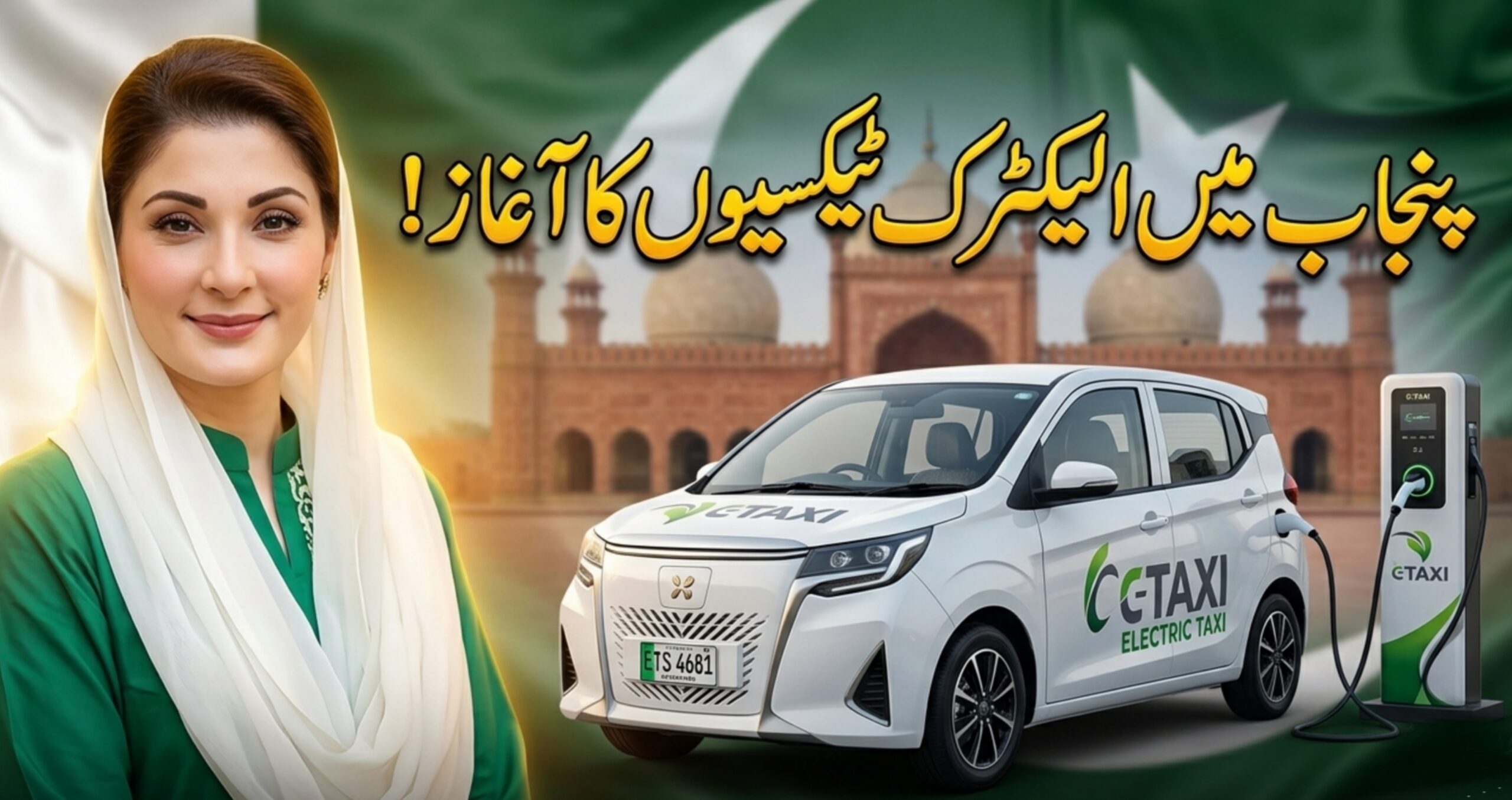
Introduction to Maryam Nawaz E-Taxi Scheme
Pakistan’s transport sector is slowly shifting toward modern and environmentally friendly solutions. One of the most talked-about initiatives recently is the Maryam Nawaz E-Taxi Scheme, launched by the Punjab government to introduce electric taxis across major cities. The project aims to combine clean energy, employment opportunities, and modern transport technology in one comprehensive program.
The idea is simple but powerful. Instead of relying on petrol or diesel vehicles that contribute heavily to air pollution, the government plans to introduce electric taxis (EV taxis) that run on rechargeable batteries. These vehicles are cheaper to operate, produce zero emissions, and can significantly reduce transport costs for drivers.
The initiative officially began in 2026 with the launch in Lahore, where the government introduced a pilot phase to test the electric taxi model and create new employment opportunities for young drivers.
For many people in Pakistan, owning a taxi has always been an opportunity to start a small business. The challenge has always been the high cost of vehicles and expensive fuel. The E-Taxi Scheme attempts to solve both problems by offering government subsidies, interest-free financing, and modern electric vehicles that cost less to run.
Another intriguing aspect of this initiative is that it is not only about transportation. It also connects drivers with ride-hailing platforms such as Careem and inDrive, allowing them to earn income through digital ride services from the very beginning.
The Maryam Nawaz E-Taxi Scheme aims to transform urban transport in Punjab and generate new economic opportunities for thousands of drivers.
Why the Government Introduced Electric Taxis
Rising Fuel Costs and Economic Pressure
One of the main reasons behind the launch of the E-Taxi scheme is the rapid increase in fuel prices in Pakistan. Petrol and diesel prices fluctuate frequently, making it difficult for taxi drivers and ride-hailing drivers to maintain stable earnings. Many drivers spend a large portion of their income on fuel alone.
Electric vehicles offer a practical solution to this problem. Charging an electric car costs significantly less than filling a petrol tank. In some cases, daily charging costs can be a fraction of fuel expenses, which directly increases the driver’s profit margin.
The Punjab government recognized that switching to electric taxis could reduce operational costs for drivers while improving the overall efficiency of urban transportation.
Environmental Benefits and Pollution Reduction
Air pollution has become a serious issue in major Pakistani cities such as Lahore, Faisalabad, and Rawalpindi. Smog levels rise every winter, causing health issues and environmental concerns.
Electric vehicles produce zero tailpipe emissions, which means they do not release harmful gases like carbon dioxide or nitrogen oxides. By introducing electric taxis, the government hopes to reduce pollution and improve air quality.
The E-Taxi scheme is also part of a broader effort to promote green transportation and sustainable urban mobility in Punjab. The government has allocated billions of rupees for clean transport projects, including electric buses and charging infrastructure.
This shift toward electric mobility aligns with global trends, as many countries are replacing petrol vehicles with electric alternatives to reduce environmental damage.
Cities and Districts Included in the First Phase
Major Urban Centers Selected for Launch
The E-Taxi scheme did not launch across the entire province at once. Instead, the government decided to start with major urban centers where ride-hailing services and public transport demand are already high.
The first phase focuses on cities such as
- Lahore
- Faisalabad
- Rawalpindi
- Multan
- Sialkot
These cities were selected because they have large populations, busy commercial activity, and strong demand for taxi services. Starting in major urban areas allows the government to test the system efficiently and improve it before expanding to other districts.
Expansion Plan for More Districts
The government has already announced plans to expand the program to additional cities across Punjab. Future phases may include cities such as Gujranwala, Sargodha, Bahawalpur, Sheikhupura, and Dera Ghazi Khan.
Ultimately, the long-term vision is to extend electric taxis to all districts of Punjab, creating a modern and sustainable transportation network throughout the province.
Total Number of Vehicles and Future Expansion
Phase-One Vehicle Distribution
In the first phase of the E-Taxi Scheme, the Punjab government plans to introduce 1,100 electric taxis. This initial rollout serves as a pilot project to evaluate performance, driver earnings, and operational efficiency.
The distribution structure includes:
| Category | Number of Vehicles |
|---|---|
| Fleet Owners | 1,000 |
| Individual Drivers | 100 |
| Reserved for Women | 30 |
This structure ensures that both large transport operators and individual drivers can participate in the scheme.
Planned Expansion Across Punjab
After the pilot phase, the government intends to expand the program significantly. Later phases may introduce thousands of additional electric taxis as charging infrastructure improves and demand increases.
The expansion plan is expected to include more cities and potentially more vehicle types, including electric bikes for delivery services.
Eligibility Criteria for Applicants
Basic Requirements for Drivers
To ensure fairness and transparency, the government has established certain eligibility requirements for individuals who want to apply for the scheme.
Applicants typically must:
- Be a resident of Punjab
- Be between 21 and 45 years of age
- Possess a valid driving license
- Have a clean driving record
- Not already own a commercial taxi
The government may also prioritize unemployed youth and low-income applicants who require financial assistance to establish their own transport business.
The government has also reserved special quotas for women and differently-abled individuals, encouraging broader participation in the transport sector.
Subsidy and Financial Assistance
The most attractive feature of the E-Taxi scheme is its financial support structure. Purchasing a vehicle is usually expensive, but the government has introduced several incentives to make electric taxis affordable.
Some key financial benefits include:
- Interest-free loans for five years
- Government assistance for down payments
- Subsidies covering registration and token tax
- Financing support up to Rs. 6.5 million per vehicle
The Punjab government has allocated approximately Rs. 3.5 billion for this project to support drivers and encourage the adoption of electric vehicles.
Monthly installments are expected to range between Rs. 25,000 and Rs. 35,000, depending on the vehicle model and financing terms.
Features of Electric Taxis
The scheme specifically designs electric vehicles for urban taxi services.
Two primary models include the Honri VC20 and the Honri VC30, both developed in collaboration with local automotive partners.
| Feature | Honri VC20 | Honri VC30 |
|---|---|---|
| Driving Range | 200 km | 300 km |
| Charging Time | 5–7 hours | 6–7 hours |
| Max Speed | 100 km/h | 110 km/h |
These vehicles include modern features such as
- Lithium-ion batteries
- Digital taxi meters
- Rear cameras
- Air conditioning and heating
- Fast-charging ports
They are quiet, efficient, and ideal for city travel.
Charging Infrastructure in Punjab
For electric taxis to work effectively, charging stations are essential. The Punjab government has already begun installing charging infrastructure across major cities.
Plans include:
- Over 50 charging stations by 2026
- Solar-powered charging hubs
- Charging stations every few kilometers in large cities
- Fast-charging facilities at major transport hubs
These stations are being installed in locations such as Thokar Niaz Baig, Kalma Chowk, Rawalpindi Saddar, and Faisalabad D-Ground.
Step-by-Step Application Process
The application process for the E-Taxi scheme is expected to be mostly online to ensure transparency and convenience.
Typical steps include:
- Visit the official Punjab Transport Department portal.
- Create an online account.
- Fill out the application form.
- Upload required documents such as CNIC (Computerized National Identity Card) and driving license, which are necessary for identity verification.
- Submit the application and receive a tracking number.
- Wait for verification and approval.
Successful applicants are notified via SMS or email once their vehicle allocation is confirmed.
Benefits of the Scheme for Youth and Women
One of the biggest strengths of the E-Taxi program is its focus on economic empowerment.
Young people who struggle to find stable employment can start earning income through ride-hailing services. For many individuals, this opportunity represents a chance to build a small business and become financially independent.
The scheme also encourages women’s participation in the transport sector, with a specific quota reserved for female drivers. This step not only promotes gender inclusion but also helps improve safety and accessibility for female passengers.
Challenges and Future of Electric Transport in Pakistan
Despite the E-Taxi scheme’s promise, we still need to address several challenges.
Some of the key challenges include:
- Limited charging infrastructure in smaller cities
- Public awareness about electric vehicles
- High initial cost of EV technology
- Maintenance and technical support availability
Despite these challenges, the future of electric transport in Pakistan looks promising. With continued investment and technological improvements, electric vehicles could become a common sight on Pakistani roads.
Final Thoughts
The Maryam Nawaz E-Taxi Scheme represents a significant step toward modernizing Pakistan’s transportation sector. By combining clean energy technology with financial support for drivers, the program offers both environmental and economic benefits.
If the initiative continues to expand and improve, it could create thousands of jobs, reduce pollution, and transform urban mobility across Punjab.
Electric taxis may soon become a normal part of daily life in Pakistan’s major cities.
FAQs
1. What is the Maryam Nawaz E-Taxi Scheme?
It is a Punjab government initiative that provides electric taxis to drivers through subsidies and interest-free installment plans.
2. How many taxis are available in the first phase?
The first phase includes about 1,100 electric taxis distributed between fleet operators and individual drivers.
3. Which cities are included in the scheme?
Major cities include Lahore, Faisalabad, Rawalpindi, Multan, and Sialkot.
4. How much income can drivers earn?
Drivers may earn around Rs. 50,000–65,000 per month depending on the number of rides completed.
5. Is there any subsidy in the scheme?
Yes, the government provides subsidies, interest-free financing, and assistance with registration and taxes